
Thailand Lottery: Official Rules, Draws, and Ticket Guide
Posted: November 22, 2026
Government Lottery Office Operations and Draw Schedule
The Government Lottery Office, commonly abbreviated as the GLO, functions as the official state enterprise responsible for administering, printing, and managing the Thai government lottery. Established under national legislation, the agency allocates generated revenues toward public finance, social development programs, and charitable projects. All official games run under strictly monitored administrative protocols to maintain operational integrity.
Public lottery draws occur twice every month, regularly falling on the 1st and 16th days of each calendar month. When a scheduled draw date conflicts with major national holidays or significant Buddhist observances, the GLO reschedules the drawing to an adjacent calendar date. Drawings commence in the mid-afternoon at the official GLO broadcast facility in Nonthaburi Province.
Draw Frequency
Official sessions take place on the 1st and 16th of each month, with occasional minor shifts for designated national holidays.
Broadcast Transparency
The entire drawing process broadcasts live across state television, official radio stations, and authorized public streaming channels.
Oversight Committees
Draw operations involve rotating supervisory panels comprising civil servants, community leaders, and media observers who inspect every mechanical draw ball.
The drawing mechanism utilizes transparent mechanical lottery machines rather than electronic random number generators. Solid numbered balls undergo strict weighing and measurement checks before an audience of independent observers prior to each session. This physical selection method helps maintain procedural clarity for the public throughout the process.

The Government Lottery Office conducts live public draws twice each month using monitored mechanical equipment.
Ticket Structure and Prize Categories
Official Thai lottery tickets feature a unique six-digit numeric sequence ranging from 000000 to 999999. Historically issued as joined twin tickets, modern distribution also integrates single-sheet formats and digital allocations sold through authorized state applications. Each ticket contains anti-counterfeit security features, including watermarks, specialized micro-lettering, and interactive verification codes.
Prize allocations span multiple tiers, offering payouts for complete matches as well as partial numeric alignments. The premier prize tier requires an exact six-digit match, while lower tiers reward adjacent combinations and partial front or rear matches. This layered distribution system creates various avenues for potential returns on a single valid ticket.
| Prize Tier | Matching Digits | Award Details |
| First Prize | Six digits | Top payout for matching the full six-digit sequence. |
| Second Prize | Six digits | Awarded across multiple unique six-digit numbers drawn. |
| Third Prize | Six digits | Multiple selected numbers receive this fixed tier reward. |
| Fourth Prize | Six digits | Distributed across dozens of drawn six-digit combinations. |
| Fifth Prize | Six digits | Distributed across one hundred separate drawn combinations. |
| Running Digits | Two or three | Rewards for matching the front or final digits drawn. |
Special consolation prizes exist for numbers that fall immediately above or below the winning 1st prize combination by a single digit. In addition, players win lower-tier payouts by matching either the first three digits, the last three digits, or the final two digits drawn during the session. These supplementary categories allow a large number of participants to recover ticket values or secure modest returns.
Checking Winning Numbers and Claiming Thai Lotto Prizes
Official lottery results become available immediately following the conclusion of the live afternoon draw. Participants verify their numbers through the official website of the Government Lottery Office, authorized television rebroadcasts, or printed broadsheet summaries published nationwide. Mobile banking applications integrated with government systems also provide secure scanning tools for instant verification.
Claiming a winning ticket requires following specific administrative procedures designed to validate ticket authenticity and confirm the identity of the bearer. Prize claims must occur within a legal limitation window, typically spanning two years from the initial draw date. Missing this regulatory window results in the forfeiture of winnings to state funds.
- Sign the reverse side of the physical winning ticket in ink with a legal name and current contact details.
- Present the original signed ticket alongside an official government identification card or a valid passport for foreign nationals.
- Visit the primary Government Lottery Office headquarters in Nonthaburi for major prizes, or utilize licensed partner bank branches for smaller prize tiers.
- Pay the mandatory government stamp duty or withholding tax deduction applied directly against the total prize payout.
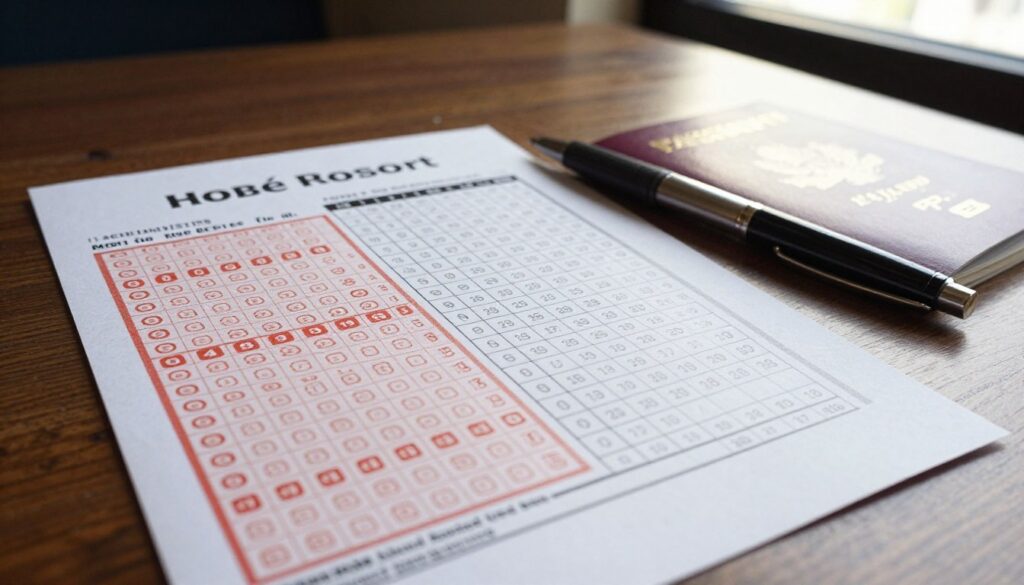
Winning tickets require ink signatures and matching passport identification during the verification process.
Foreign visitors holding legal travel status face no restrictions against buying tickets or claiming legitimate winnings. Stamp duty on regular government lottery prizes stands at a minimal statutory rate, automatically deducted upon distribution. Secondary local ticket brokers frequently redeem minor prizes on the spot in exchange for a modest processing fee.
Cultural Traditions and Thai Lotto Number Selection
The cultural atmosphere surrounding Thai Lotto involves an intricate blend of local folklore, numerology, and observation. Many participants seek inspiration for potential lucky numbers through unusual daily events, dreams, or significant historical dates. Community members often travel to revered local shrines, consult respected monks, or examine patterns in nature to discover auspicious combinations.
Automobile license plates linked to high-profile figures, unexpected births in uncommon locations, and unusual animal sightings frequently prompt rapid runs on specific ticket sequences. Street vendors often command higher prices for tickets ending in popular cultural digits. Despite the popularity of these traditions, the mechanical lottery apparatus operates on pure mathematical probability without external influence.
Popular Cultural Beliefs
- Numbers drawn from significant dreams or personal milestones.
- Auspicious dates linked to public festivals and ceremonies.
- Patterns derived from visits to ancient banyan trees or shrines.
Official Draw Realities
- Every six-digit sequence holds an equal mathematical chance.
- Inspected mechanical drums determine outcomes randomly.
- Past statistical patterns provide no predictive influence on future draws.
Understanding the distinction between traditional social practices and genuine mathematical reality supports healthier participation habits. While cultural customs add social engagement to the draw experience, winning outcomes rely exclusively on chance. Recognizing this boundary prevents unreasonable expectations and promotes balanced decision-making.
Unofficial Sellers, Common Scams, and Safe Play
High public demand for lottery tickets has fostered various secondary markets and unauthorized wagering networks. Underground lottery games, locally referred to as lotto tai din, operate outside state regulatory boundaries and remain strictly illegal under national law. Engaging with informal underground operators carries severe legal risks and offers no consumer protections if operators refuse to honor winning bets.
Street vendors frequently apply markups above the official standard retail price printed on the tickets, especially for paired sheets or culturally desirable combinations. While purchasing from street stalls remains widespread, buyers should examine tickets carefully to detect counterfeit paper, altered numbers, or expired draw dates. Digital government retail platforms now provide direct access to tickets at statutory baseline pricing.
Avoid online syndicates or private groups claiming to possess leaked winning numbers or guaranteed prediction formulas. State lottery draws use sealed mechanical apparatuses, rendering advance knowledge of numbers impossible.
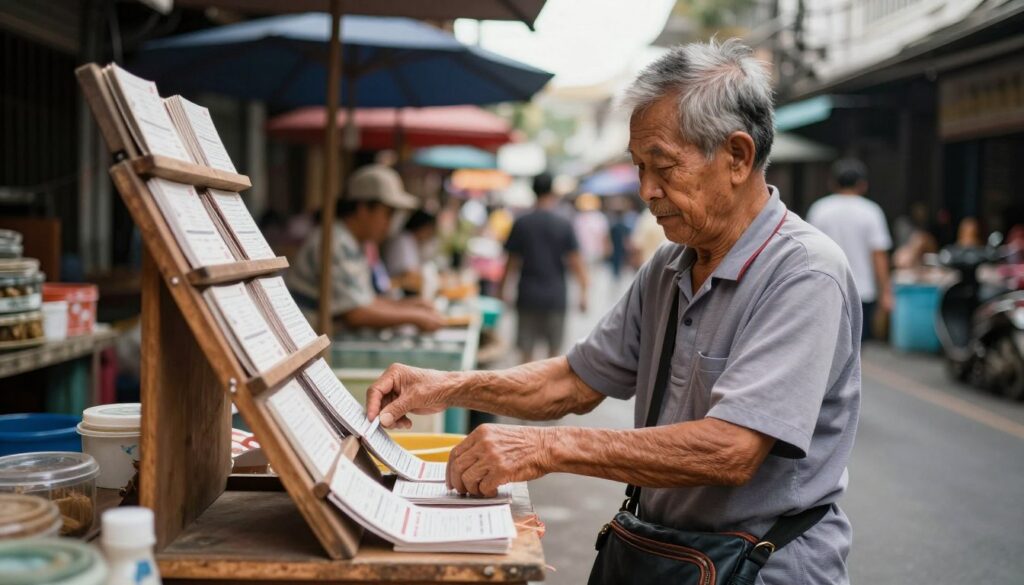
Purchasing tickets directly from authorized sellers minimizes exposure to counterfeit products and illegal wagering schemes.
Responsible participation requires treating ticket purchases as recreational expenditure rather than a dependable financial strategy. Setting strict spending caps prevents lottery engagement from disrupting household budgets. If lottery habits cause personal distress or financial strain, stepping back and seeking local guidance helps restore balance.
Frequently Asked Questions
Can foreign tourists legally buy lottery tickets in Thailand?
Foreign tourists can legally purchase official Thai lottery tickets from any vendor across the country. Claiming a prize requires presenting the original ticket alongside a valid passport for identification.
What is the legal minimum age to purchase lottery tickets?
The legal age requirement to buy lottery tickets or redeem prizes in Thailand is twenty years of age. Retailers are legally prohibited from selling tickets to minors under this threshold.
How much time is available to claim a winning ticket?
Winners must claim their prizes within two years from the official draw date. Unclaimed winnings after this regulatory period are permanently remitted to state revenue.
Where are major lottery prizes redeemed?
First prize and high-value tiers are redeemed in person at the Government Lottery Office headquarters in Nonthaburi. Smaller tier prizes can be processed through participating state-owned bank branches or authorized retail redemption counters.
Are lottery winnings subject to taxation in Thailand?
Lottery winnings face a mandatory deduction consisting of stamp duty or withholding tax. The Government Lottery Office automatically deducts this standard fee before disbursing net prize payments.
Summary of the Thailand Lottery System
The Thailand Lottery operates as a transparent, state-run institution that combines traditional cultural enthusiasm with structured administrative oversight. Safe participation relies on buying authentic tickets through authorized channels, keeping realistic expectations regarding probability, and adhering to official claiming steps. Approaching the game as light recreation supports a responsible and enjoyable experience for all participants.